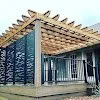
The end of sanding season; Why busy homeowners are switching to composite.
For most homeowners, the first warm Saturday of spring should be about firing up the grill, uncovering the patio furniture, and enjoying the fresh air. But if you own a traditional pressure-treated wood deck, that first weekend usually looks a lot different. It looks like power washers, orbital sanders, messy cans of mahogany stain, and a sore back.
The "Sanding Season" has arrived—and for a growing number of homeowners, it’s the last one they ever want to deal with.
As our schedules get busier and our free time becomes more precious, the shift toward composite decking has moved from a luxury trend to a practical necessity. People are realizing that while wood has a classic look, the "hidden cost" of wood is measured in hours of labor and redirected weekend plans.
Why the Shift is Happening Now
In 2026, the "maintenance-free" lifestyle isn't just a buzzword; it’s a requirement for the modern home. Composite decking—engineered from a blend of recycled wood fibers and durable plastics—has evolved. We’ve moved past the days of "plastic-looking" boards. Today’s high-end composites offer deep, variegated wood grains that mimic Brazilian Ipe or North American Oak so closely you’ll have to touch them to tell the difference.
But the real magic happens when the rain hits or the sun beats down. While wood begins to warp, crack, and lose its color the moment it’s installed, composite stays exactly as it was the day it was laid down. No splinters, no rot, and—most importantly—no sanding.
In this post, we’re going to break down exactly how much time you save by making the switch, and why your future self (and your weekend schedule) will thank you.
Feature Traditional Wood Decking High-Performance Composite
Annual Cleaning Scrubbing + Power Washing Simple Soap & Water Rinse
Sanding & Staining Every 2–3 Years (Required) Never
Splinters & Cracks Common as wood dries out None (Safe for bare feet/pets)
Rot & Insect Risk High (Requires chemical treats) Immune to rot and termites
Color Fading Rapid (Requires restaining) UV-Resistant (Stay-True color)
Average Lifespan 10–15 Years 25–50 Years
Total Weekend Cost Hundreds of hours over a decade Zero "Maintenance Weekends"
While wood is cheaper on day one, composite pays for itself in just 5–7 years by eliminating the cost of stains, sealers, and professional labor
Frequently Asked Questions About Composite Decking
1. Does composite decking get hotter than wood in the sun?
Like any outdoor surface, composite decking will absorb heat on a hot day. However, modern 2026 engineering has come a long way. To keep your deck cool:
Choose lighter colors: Greys and tans reflect more sunlight than dark charcoals.
Opt for "Capped" boards: High-quality polymer caps are designed to dissipate heat more effectively than older generations of composite.
2. Can I really just clean it with a hose?
For most dirt and debris, yes. A simple rinse with a garden hose is usually enough. For stubborn spots like pollen or spilled food, use warm soapy water and a soft-bristle brush. Unlike wood, you will never need to "deep clean" to prepare for a fresh coat of stain.
3. Is composite decking slippery when wet?
Most modern composite boards feature a deep, embossed grain that provides excellent traction, often exceeding the slip-resistance of painted or sealed wood.
4. How much does it actually increase my home’s value?
Real estate data shows that a high-quality composite deck can provide an ROI of 65%–80%. More importantly, homes with "maintenance-free" features often sell faster because today’s buyers prioritize move-in-ready outdoor spaces over projects.